Corpus Christi homes keep a different kind of list. Here's what the sun, wind, humidity and salt air do to a home in the Bend — and how to stay ahead of it.
Living on the Coastal Bend is worth it — but the same sun, wind, humidity and salt air that make it beautiful are hard on a home. A little seasonal attention keeps small issues from turning into big repairs. Here's what tends to matter most around Corpus Christi, and how to stay ahead of it.
Salt air and hardware
Salt in the air accelerates corrosion on anything metal and exposed — hinges, latches, screws, brackets, and outdoor fixtures. Coastal homes go through hardware faster than inland ones, and a seized hinge or rusted latch is usually the first visible sign.
The fix is as much about material as maintenance. Stainless and coated hardware rated for coastal or marine use holds up far better than standard fasteners. When something gets replaced, it's worth replacing it with the right grade so you're not back at it next season.
Check exterior door and gate hardware for rust or stiffness
Replace corroded fasteners with stainless or coated equivalents
Lubricate hinges and latches that have started to bind
Watch outdoor light and fixture mounts for corrosion streaks
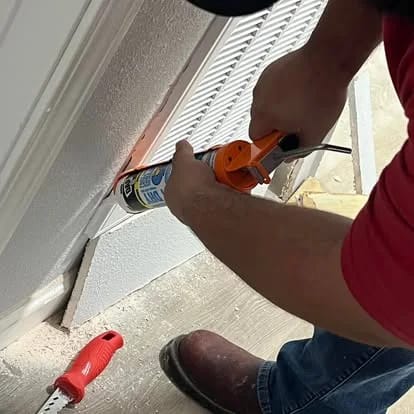
Humidity is patient. It finds every failed caulk line, worn weatherstrip and small gap, and works its way in — around windows, doors, tubs and counters. Sealant is the home's first line of defense, and it's also the first thing to fail.
The trap is sealing over a problem instead of fixing it. Fresh caulk on top of active moisture or rot just hides it while the damage continues. The right sequence is always to check what's behind the gap first, then seal a sound surface.
Look for cracked, shrinking or blackened caulk lines
Test door and window weatherstrip for drafts
Re-seal tubs, showers and counters where the bead has pulled away
Address any soft or stained surface before caulking over it
Coastal wind is relentless, and it works things loose over time. Gates drop out of square, pickets loosen, exterior doors fall out of alignment, and fasteners back out. None of it is dramatic on any given day — it just adds up until the gate won't latch or the door won't shut.
Most of this is straightforward to catch early. A gate re-squared before the post fails, or a door re-adjusted before it starts dragging, is a small job. Left alone, the same issues turn into replacements.
Open and close every gate — note any that sag or won't latch
Check the fence line for lean after windy stretches
Test exterior doors for sticking, dragging or gaps
The Gulf sun is hard on paint and finishes. Exterior coatings fade, chalk and eventually peel faster here than in milder climates, and once the surface breaks down, moisture gets underneath and the problem accelerates.
Exterior paint is one of those jobs where preparation decides everything. Filling, sanding, caulking and priming are what make a coastal paint job last years instead of a season. Skipping prep to save time on the coast is a false economy.
Look for chalky, faded or peeling exterior paint
Check south- and west-facing walls first — they take the most sun
Note any bare wood or exposed surface that needs sealing
Plan exterior painting around prep, not just color
Inside, the list grows quietly — the wall dinged during a move, the anchor holes from a shelf that came down, the settling crack above a doorway, the fixture that's looked dated for a year. Individually, none of it feels urgent.
The efficient way to handle interior upkeep is to let it accumulate into a list, then knock it out in one organized visit. A patch that disappears into the wall texture and a door that finally closes cleanly do more for how a home feels than their size suggests.
Keep a running note of small interior fixes as you notice them
Group drywall, mounting and adjustment jobs together
Prioritize anything that affects daily use or security
Bundle the list into a single visit rather than one-offs
Part of good home care is knowing what isn't a handyman job. Some things are genuinely dangerous or legally restricted, and the honest move is to route them to the right licensed trade rather than improvise.
Garage-door springs, new electrical circuits, in-wall plumbing, structural or foundation movement, roofing, and anything needing a permit or windstorm inspection all belong with a specialist. A good handyman will tell you that plainly — and can still handle everything around it.
Springs and high-tension systems — garage-door specialist
New circuits, panels and rewiring — licensed electrician
In-wall or main-line plumbing — licensed plumber
Structural, foundation or permitted work — the right professional